For decades, the global agricultural commodity market worked on a simple but harmful principle: yield at any cost. Success was measured in bushels per acre, no matter how much chemicals ran off into the water or how much the soil lost its nutrients. But as we move into 2026, things are changing in a big way.
What Is Sustainable Farming?
Sustainable farming is a way of farming that tries to meet the food and textile needs of today’s society without making it harder for future generations to do the same. Sustainable farming sees the farm as a living ecosystem, while industrial farming often uses a lot of chemicals to get short-term high yields. It strikes a balance between three main goals: social equity, economic profitability and environmental health. This approach aims to protect biodiversity, save water and improve the land’s natural fertility by focusing on the long-term care of natural resources. This will make sure that the food system stays strong even as the climate changes.
How Does Sustainable Farming Work?
The mechanics of sustainable farming are based on copying natural processes to keep a cycle going. Farmers use natural methods like cover cropping and composting to feed the soil instead of using synthetic fertilisers.
How Exactly Does Sustainable Farming Change Agricultural Commodities?
There are multiple ways that sustainable farming is changing agricultural commodities:
From “Yield-First” to “Soil-First”
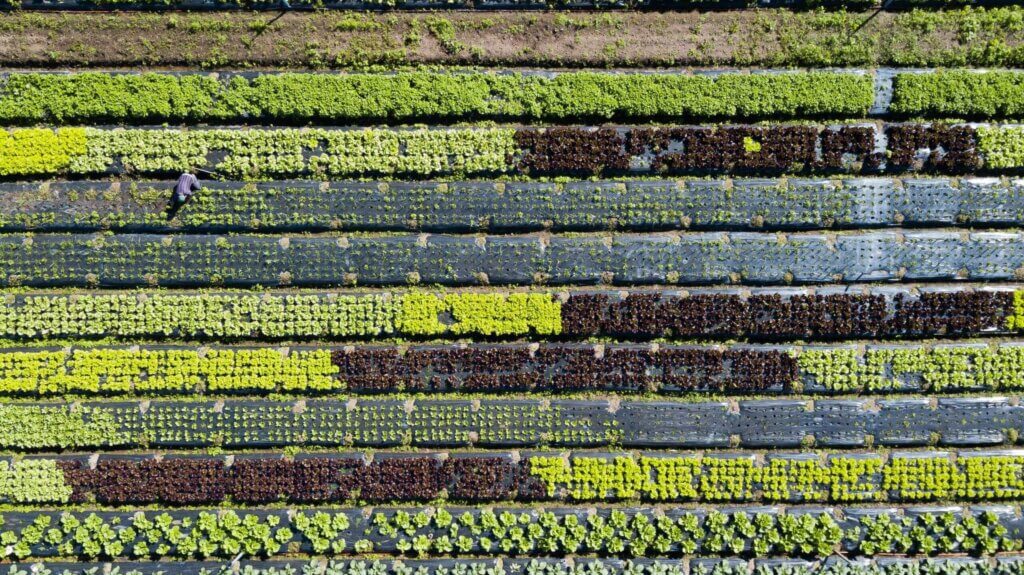
The most important way that sustainable farming is changing commodities is by focusing on the health of the soil. In the past, people thought of soil as a sterile place to keep plants while they were fed synthetic fertilisers. Regenerative agriculture, which focuses on minimal tillage, cover cropping and crop rotation, is turning soil into a powerful carbon sink.
This change is affecting the land’s and the crops’ financial value. Carbon credits are becoming more and more connected to crops grown in “living soils.” In 2026, a farmer sees a field of wheat as more than just a food source; it’s also a proven carbon sink. This “stacked value” is making sustainably grown goods more expensive because companies are rushing to meet net-zero goals by buying from regenerative supply chains.
The Growth of Traceable Goods
In the old model, commodities were “fungible,” which means that one tonne of soy was the same as another, no matter where it came from. Sustainable farming is making fungibility go away.
Because of rules like the EU Deforestation Regulation (EUDR) and customers wanting to know where their products come from, the market now needs traceability. A buyer in London can now use blockchain and satellite monitoring to make sure that the coffee beans they buy didn’t cause deforestation in Brazil.
Transparency: You can see real-time data on how much water and chemicals are being used.
Verification: Each batch of grain gets a digital “passport.”
Trust: Customers will pay 10–15% more for products that have a “clean” origin story.
Resilience is the New Currency
Climate change has made the markets for traditional goods very unstable. Extreme droughts and floods that happen “once in a century” are now common. Agroforestry and precision water management are two examples of sustainable farming methods that can help protect against this kind of change.
Farms that are sustainable are stronger. They hold water better when it’s dry and don’t wash away as easily when it’s wet. “Sustainable” now means “low risk” for traders of goods and insurers. “Resilience Premiums” are starting to show up in 2026. These are when commodities from climate-smart farms are preferred because they have a more stable and predictable supply chain.
AI Integration for High-Tech Sustainability
High-tech automation has joined the “dirt-under-the-fingernails” image of sustainable farming. In 2026, drones and robotic sprayers that use AI are common. These tools let you use variable rate technology, which means you only put nutrients where they are needed.
This level of accuracy lowers the “input cost” of goods. Farmers are lowering their costs and making their crops cleaner by using 70–90% less herbicide. This change is also changing the market for chemical commodities, as the demand for bulk synthetic fertilisers levels off in favour of biological biostimulants.
A New Way of Thinking About the Market
In this new age, the people who win aren’t just the ones who own the most land. They’re also the ones who have the best data and the healthiest ecosystems. As sustainable farming grows, the “green” version of a product will probably become the norm, while “conventional” products, which have a lot of carbon footprints and harm the environment, will become the cheap ones.